
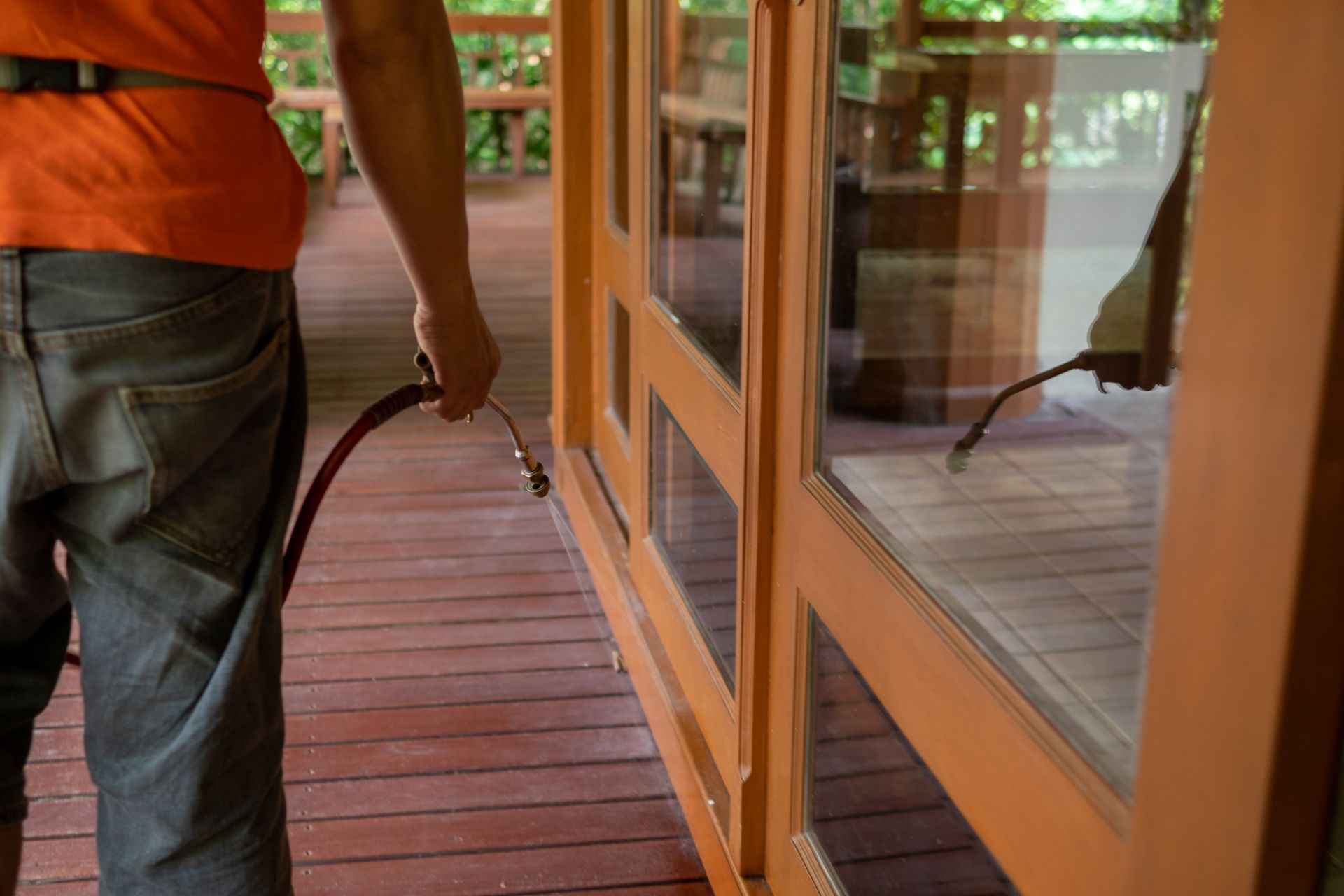
Wood Surfaces Protected from Nesting Damage
Carpenter Bee Control in Goshen for decks, siding, fences, and overhangs showing circular entry holes and sawdust trails
Half-inch diameter holes drilled into fascia boards, deck railings, cedar siding, and fence posts signal carpenter bee nesting activity that returns to the same locations year after year if left untreated. Panvibes Professional Pest Solutions inspects properties throughout Goshen for carpenter bee activity during peak nesting season, identifying active holes, assessing damage severity, and recommending treatment measures that reduce future infestations. Female carpenter bees prefer untreated or weathered wood, especially softer species like pine, cedar, and redwood commonly used in exterior residential construction.
Carpenter bees do not consume wood but excavate tunnels where they lay eggs and provision larvae with pollen, creating galleries that expand over multiple seasons as new generations reuse and extend existing tunnels. The visible entry hole represents only the beginning of a tunnel system that can run six inches or more along the wood grain, and multiple holes in the same board indicate heavy nesting pressure that weakens structural integrity and creates aesthetic damage.
Arrange an inspection before peak nesting activity occurs in spring to treat vulnerable wood surfaces and prevent new holes from being drilled.
What Proper Carpenter Bee Control Requires
Carpenter bee control involves treating active nesting holes to eliminate larvae and discourage returning adults, combined with preventative measures such as applying paint or wood sealant to untreated surfaces that attract new nesting activity. Bare wood exposed to sunlight draws the highest nesting pressure, while painted or stained surfaces receive fewer attacks since female bees prefer unfinished wood that is easier to excavate.
After treatment, you no longer observe large yellow and black bees hovering near previously infested areas, fresh sawdust stops appearing below entry holes, and wood surfaces remain intact rather than developing new holes each spring. Male carpenter bees, which are territorial and aggressive but lack stingers, no longer dive-bomb people near nesting sites, making decks and patios usable during warm months without constant harassment from defensive bee behavior.
Preventative recommendations include filling treated holes with wood putty or caulk after treatment, painting or staining all exposed wood, and scheduling annual inspections before nesting season begins. Treatment does not include wood replacement or structural repairs unless damage has progressed beyond cosmetic concerns.
Questions Before Starting Carpenter Bee Service
Homeowners dealing with carpenter bees often need clarity on nesting behavior, treatment timing, and prevention strategies.
What is the best time to treat carpenter bee activity?
Early spring treatment prevents new holes from being drilled during peak nesting season, while late spring or summer treatment addresses active nests where larvae are developing and can be targeted before emerging as adults.
How do carpenter bees differ from bumblebees?
Carpenter bees have shiny, hairless black abdomens and nest in wood, while bumblebees have fuzzy yellow and black abdomens and nest in ground burrows or cavities, making them completely different in behavior and control requirements.
Why do carpenter bees return to the same wood every year?
Female carpenter bees prefer to reuse existing tunnel systems rather than excavating new galleries from scratch, and they are attracted to the same structures where they emerged, creating generational nesting patterns that worsen over time.
What damage can carpenter bees cause if left untreated?
Long-term carpenter bee activity weakens structural wood through extensive tunneling, creates entry points for moisture and wood-decaying fungi, and attracts woodpeckers that damage wood further while feeding on bee larvae inside galleries.
Are carpenter bee problems seasonal in Goshen?
Yes, carpenter bee nesting activity peaks during spring and early summer when females drill holes and provision nests, though adult bees may be observed during warm fall days as they seek overwintering sites in protected areas.
Panvibes Professional Pest Solutions helps Goshen property owners protect wood structures from carpenter bee damage. Contact us to schedule preventative service or address active nesting before damage expands across vulnerable surfaces.